
How to Search Civil Dockets
Begin any Lee County civil docket search with three things: the court, the case category, and the exact cause number. Circuit and County Court records live with the Circuit Clerk. Much of that material may be reachable through First Circuit MEC/PAMEC once you register. Chancery files go through the Chancery Clerk. They also run through First Chancery MEC. Public Chancery calendar pages are sorted by chancellor and date. Justice Court offers no countywide online civil-case form. Its clerk office is the practical first contact.
Write down the filing year, party roles, any known setting, and the document you need. A name match is only an index lead. Always check Lee County civil docket results. Match them against the court, filing date, case type, and cause number. Want a filed pleading, signed judgment, or certified copy? Go to the responsible clerk, not a land-record index or a calendar listing.
- Choose the Lee County court by the subject and the amount or case category stated in the papers.
- Search the applicable MEC/PAMEC route by exact cause number when remote access is available.
- For a Chancery setting, locate the chancellor and date page, then preserve the cause number.
- Call or visit the proper Lee County clerk when no public case search is exposed.
- Ask for the docket, a specific order, or a certified copy as separate record requests.
Lee County Civil Docket Courts
Where a Lee County civil docket lands depends on subject and amount. Justice Court has a published civil filing maximum. Its published civil filing maximum is $3,500. County Court is locally described as handling civil matters up to $200,000. It also takes misdemeanor appeals and eminent-domain cases. Circuit Court takes broad civil claims. The local Circuit Court page describes it as having no damages limit. Chancery Court keeps equity, domestic relations, probate, guardianship, adoption, and related files. It has a separate clerk.
The official First Circuit court information places Circuit Court within the state trial-court structure. The court picked at filing controls the clerk route and the docket you search. That holds even where two courts share related jurisdiction.
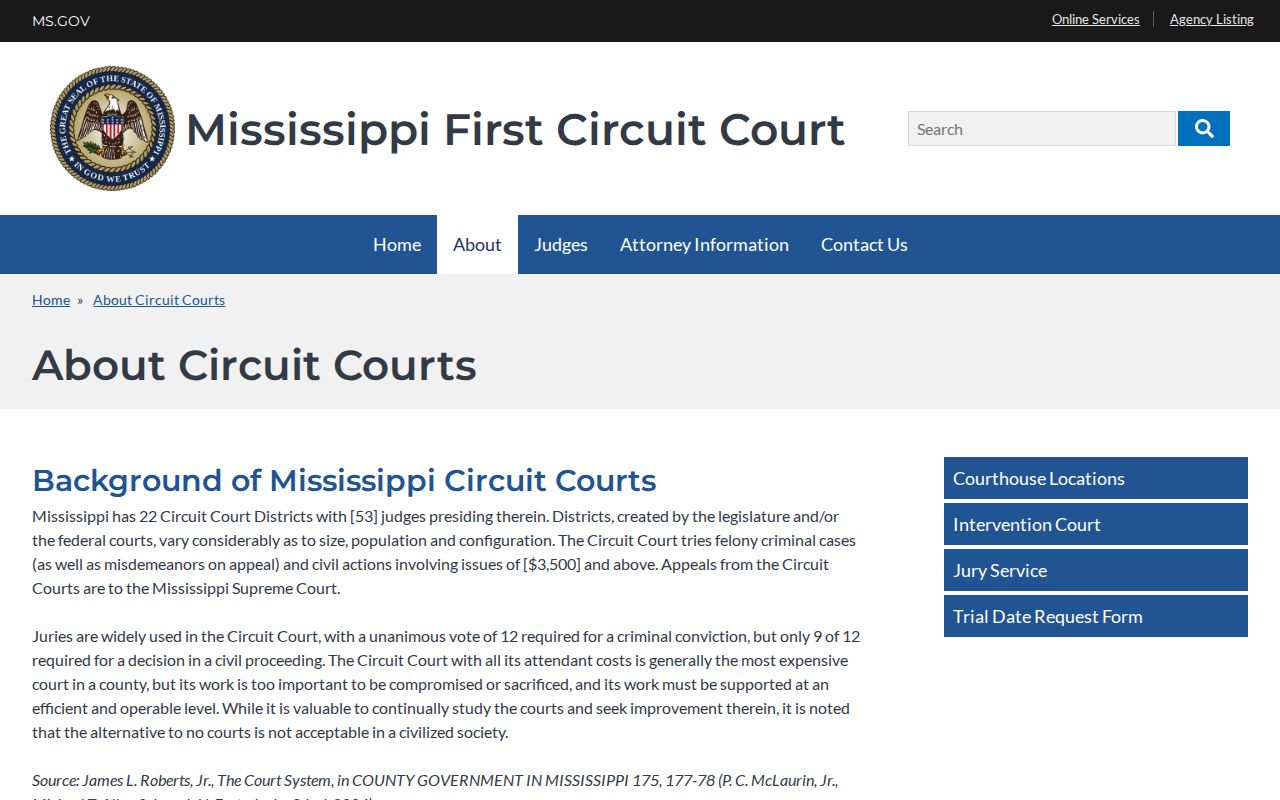
This court-by-court distinction keeps a Justice, County, Circuit, or Chancery request from landing at the wrong Lee County records office.
What a Civil Docket Shows
A Lee County civil docket typically shows the cause number, filing date, party roles, attorneys, complaint or petition, service, answer, motions, orders, setting dates, judgment, costs, execution activity, appeal, and closure. Chancery calendar records may add more. They can include the nature stated in an order and the estimated hearing time. Read entries with care. A complaint alleges a claim, and an answer responds to it. Neither one is a final judgment.
| Cause number | The court-assigned identifier, including its year, county code, and suffix when used. |
|---|---|
| Parties and roles | Identifies plaintiff or petitioner and defendant or respondent, rather than simply listing names. |
| Service and response | Shows summons or return activity and pleadings filed in response. |
| Motion and order | Distinguishes a request for relief from the signed court action that decides it. |
| Setting and outcome | Shows a hearing or trial setting and, where entered, a judgment, dismissal, settlement, or appeal. |
On a Lee County Chancery calendar, a pattern like 26-####-41-M has appeared in a sample. Verify each current entry directly rather than inferring it from that example.
Lee County Civil Motion Settings
First Circuit civil motion settings follow a set administrative workflow. Parties consult available dates and confer. They prepare an Agreed Order Setting. They mail the original with a stamped self-addressed envelope to the Court Administrator. Motion and response copies reach the judge through that office. A motion hearing does not have to happen in the originating county. That is one more reason the docket's current setting and the court's instructions both matter.
The official First Circuit civil matters page also covers trial-setting requests. Those can arrive by mail, fax, email, form, or written request. A settlement letter takes a trial off the calendar. Still, check the Lee County civil docket. Look for the filed dismissal or order with the case's recorded result.
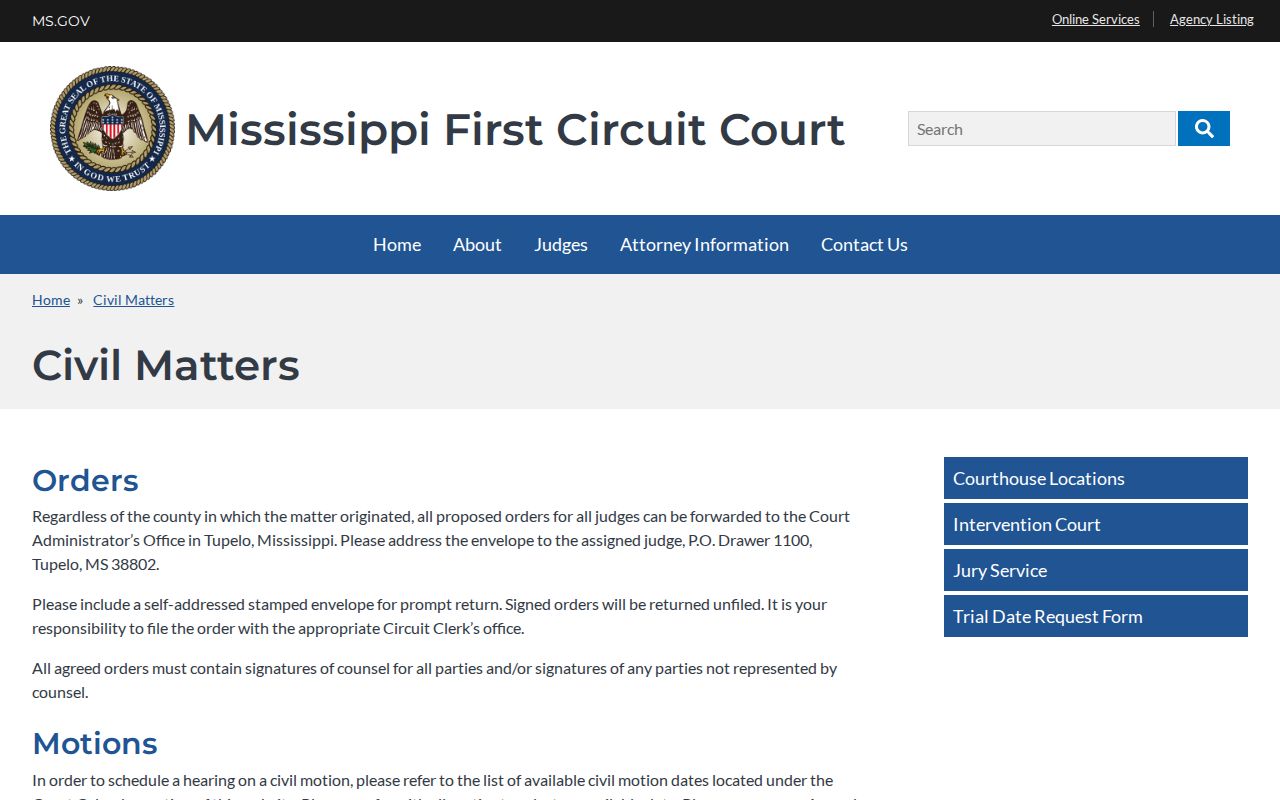
The Lee County setting process runs on formal filing and administrator confirmation, not an informal calendar entry.
Types of Civil Cases on the Docket
Lee County Circuit and County Court dockets can carry broad civil claims. County Court matters, eminent domain, and appeals also appear. Justice Court civil files are separate and cover small civil suits within its published limit. Chancery Court handles domestic relations, probate, estates, guardianship, adoption, commitments, and equity. Municipal Court takes city ordinances, traffic, and code matters. It is not a general civil damages docket.
| Lee County court | Civil docket focus | First record route |
|---|---|---|
| Justice Court | Small civil cases within the published $3,500 limit | Justice Court clerk |
| County Court | Civil matters up to the county’s described $200,000 limit and appeals | Circuit Clerk |
| Circuit Court | Broad civil cases and appeals | Circuit Clerk and First Circuit MEC |
| Chancery Court | Equity, domestic, probate, guardianship, adoption | Chancery Clerk and First Chancery MEC |
Statutory exceptions can shift Lee County civil jurisdiction. For any particular filing, the case papers and current court rules control.
Lee County Civil Clerk Route
The Lee County Circuit Clerk maintains Circuit Court and County Court files. The Lee County Chancery Clerk keeps Chancery pleadings, minute books, and suit files. Justice Court has its own clerk office. Municipal courts hold city records. Pick the clerk from the court named in the civil case. Do not go by the county name alone.
The Chancery Clerk's published office route is separate from CRMS. The Circuit Clerk's court records stand apart from municipal and Justice Court dockets. A clear civil request names the Lee County court and the cause number. It also gives the filing or setting date and the exact docket entry or document wanted.
Lee County Civil Docket or Land Index
Two different record systems live in the Lee County Chancery Clerk's office. One side keeps the land-record indexes. These cover recorded deeds, deeds of trust, liens, UCC filings, and similar instruments. The other side keeps Chancery lawsuit files. A divorce, probate, or guardianship case actually sits there. So a Chancery docket search has to go through the Chancery Clerk, the public calendar, or the First Chancery MEC/PAMEC route. The land index is a different animal entirely.
The public Lee County CRMS land-record index covers that land-record side only. Its online-copy service is handy for deeds and liens. But treat it as land records, not as a doorway into every Lee County civil case file.
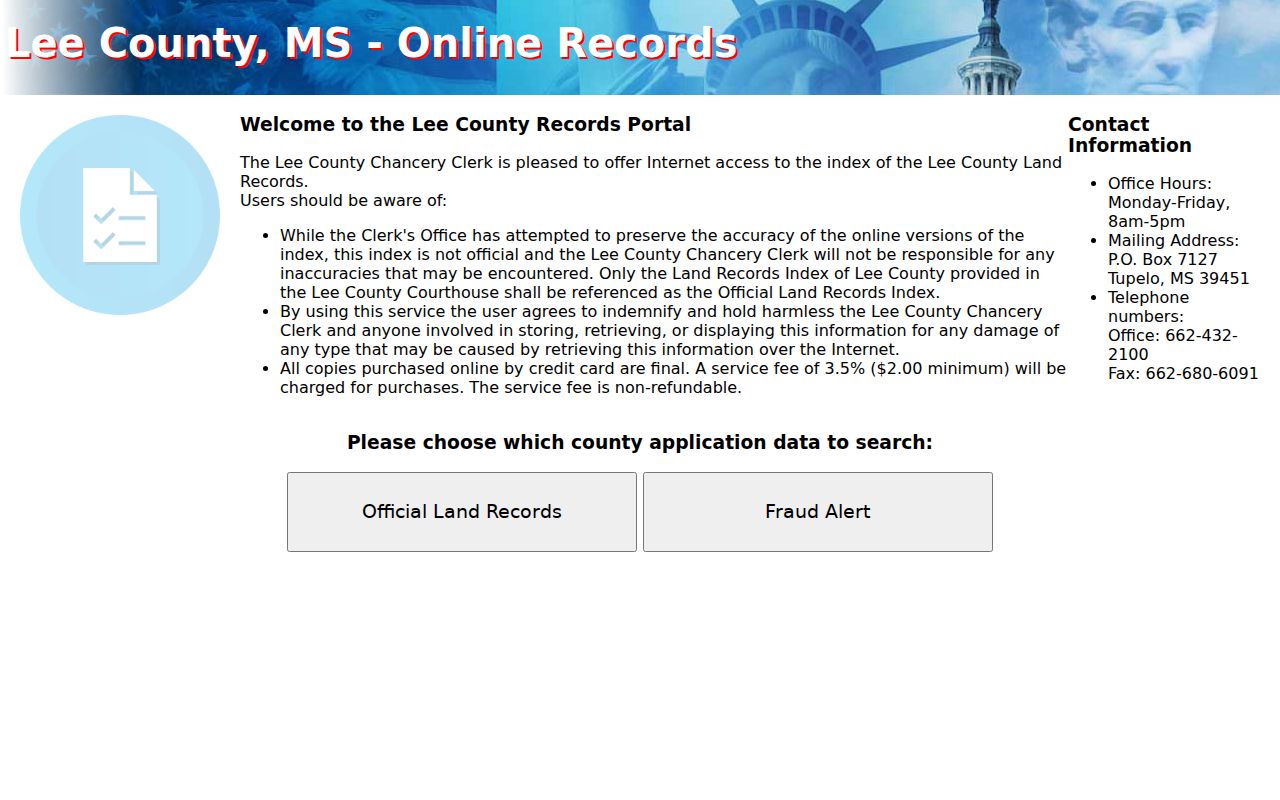
Each index has its own job in Lee County. Use the land index when you need a recorded instrument, and use a court cause number when you need the Chancery case file itself.
Settings and Hearings on Civil Dockets
A Lee County civil docket can carry many kinds of entries. A motion, a conference, a hearing, or a trial setting may all appear there. First Circuit's public calendar needs a registered-user login. It warns that it leaves out some settings and can change without notice. Chancery's public pages give more detail. You get the chancellor, date, time, cause number, parties, attorneys, the nature specified in order, the estimated time, and status labels like continued, settled, or first setting.
Read those labels as context, not as rulings. "Continued" only moves a setting. "Settled" may come before a filed dismissal or an agreed order. Before you travel for a Lee County civil court date, confirm the details. Check the date, time, location, hearing type, and court with the clerk or administrator.
Lee County Civil Docket Outcomes
Short labels on a Lee County civil docket describe steps, not outcomes. A complaint is an allegation. An answer is a response. A motion merely asks the court for an order. A calendar line marked settled may be followed by a dismissal or an agreed order, and a continued setting shifts the hearing date without changing the underlying case.
Want a real result? Request the latest signed judgment, dismissal, agreed order, or other controlling court document and read that instead. If the docket shows an appeal or enforcement activity, note the related cause numbers, since later filings often point back to the original case.
Lee County Civil Calendar Status
The First Chancery District docket site posts public hearing calendars organized by chancellor and date. It is not one big party search. A row you find there gives helpful setting context. It will not show every pleading, order, exhibit, transcript, payment, or sealed document. Those papers sit in the Lee County case file.
Use the calendar to grab the cause number and the current setting. Then call the Chancery Clerk for the actual document or file. Need a date changed? The Court Administrator or your attorney handles that. Lee County Chancery instructions also warn against trusting a stale calendar page.

In short, the Lee County Chancery calendar is a setting source, not the full civil docket or case file.
Public Access to Civil Dockets
Mississippi public-access rules govern Lee County civil records, along with court-specific confidentiality requirements. PAMEC remote access can require registration and an annual public-access fee. MEC procedures, by contrast, describe free electronic public access. It is available at the clerk's office during regular hours. Remote access stays read-only unless you hold an authorized filing account. Copies can carry statutory or clerk-set charges.
Protected information also shapes what a public Lee County civil docket shows. Chancery domestic-relations, adoption, guardianship, minor, financial-account, and protected-address material may be redacted or restricted. The local Chancery FAQ describes adoption records as sealed. When something is withheld, ask for the nonexempt portion. Accept redaction rather than assuming the item never existed.
Access point: First Chancery MEC CourtInfo identifies the separate MEC environment. Its public-access information is distinct from the visible Chancery hearing-calendar pages.
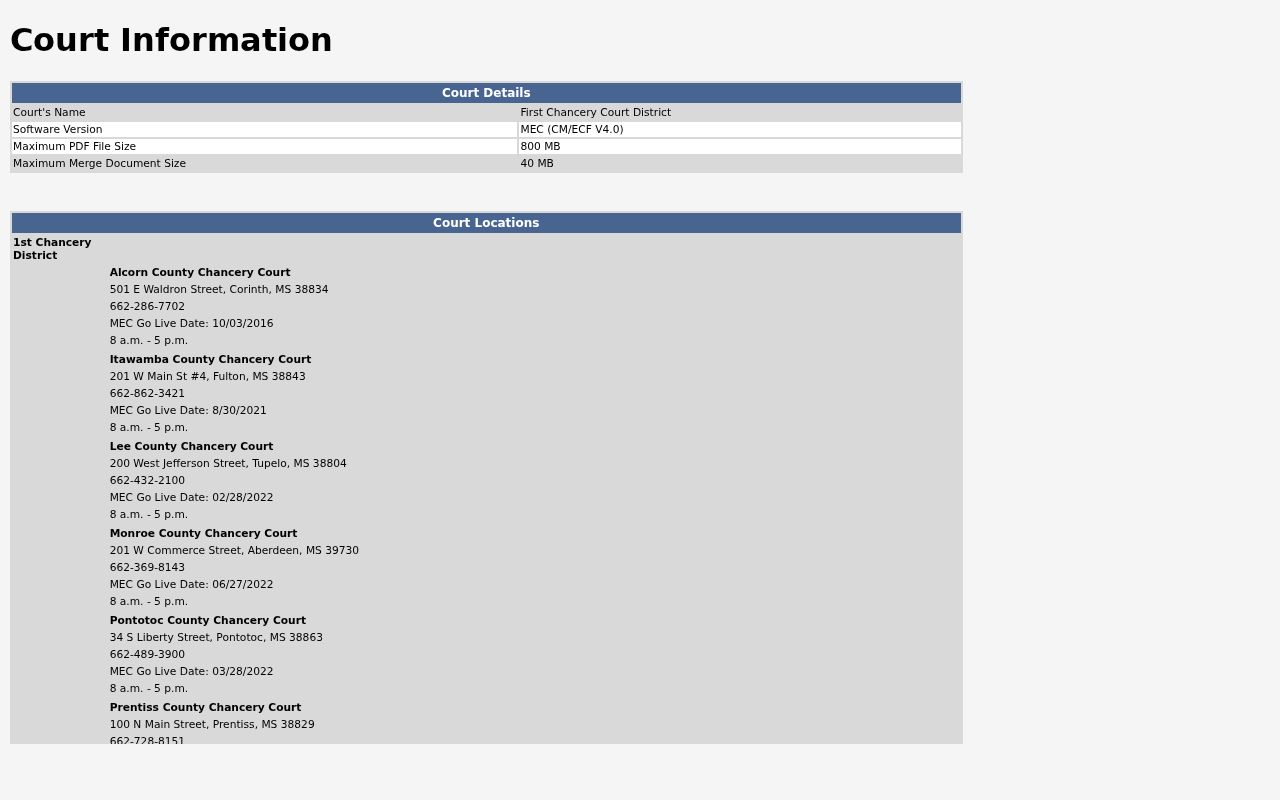
Access to a Lee County civil docket comes down to three things: the case type, the court, and whether the document you want is public or restricted.
Lee County Civil Record Requests
A good request names the basics. Give the court, the cause number, the docket entries or document you need, and a date range. For a Chancery mail-copy request, describe the document well enough to identify it. Include payment for the copies by check or money order payable to the Lee County Chancery Clerk. Add a stamped self-addressed envelope. Published Chancery rates are $0.25 per page for self-copies, $0.50 per page for staff copies, and an additional $1.00 for certification.
The official Lee County Chancery Clerk page posts the copy-request instructions shown there. Circuit, County, Justice, and municipal offices each run their own record channels. Ask for a current fee quote. Confirm the accepted payment method with whichever Lee County office actually holds the file.
Keep the fee picture straight. The Lee County Chancery copy schedule belongs to the documented Chancery request process and is not a countywide civil-copy schedule.
Lee County Civil Appeal Dockets
A Lee County Justice Court civil case can climb into County Court. The Circuit Clerk keeps the record there. Ask the clerk for an abstract. Do this once the 30-day appeal period has run. Sometimes a same-day copy is available for a County Court appeal. Keep in mind what an abstract is not. It is not the full complaint, the evidence, a transcript, or the judgment.
When a Lee County civil docket moves up on appeal, hold onto the lower-court case number. Learn the new cause number the receiving court assigns. A docket request works best when it names the exact record. That might be the Justice Court file, the appeal, a transmitted record, or a signed order. That kind of detail lets the clerk route your court records request without guesswork.