
How to Get Court Records
First, pick the Lee County clerk who actually holds the file. The Circuit Clerk keeps Circuit, County, and Youth Court records. The Chancery Clerk keeps Chancery files and minutes. Justice Court has its own clerk. A municipal case belongs with that city's clerk. PAMEC registration may give subscribers access to participating MEC records. Electronic access at the Lee County courthouse is free during regular hours. When remote options fall short, the counter still works. Phone, mail, and a focused written request work well too.
- Write down the court, exact cause or citation number, filing year, case category, and the specific docket entry, order, copy, or certification sought.
- Use the court-specific online calendar or PAMEC route when it fits the court and record, without treating a payment portal as a full case file.
- Call the responsible clerk to confirm availability, restrictions, copy method, fees, and whether the record can be reviewed at a public terminal or counter.
- For a mailed Chancery request, identify the document, include payment and a stamped self-addressed envelope; ask other offices about their current mail procedures.
- Submit a narrow written request when needed, ask for any reasonably segregable public portion, and request certification separately from an ordinary copy.
Use the official contact form for a Circuit Clerk question. It can route a question. That does not mean every court file moves through a general county contact path. A focused request sent straight to the court that owns the record is the safer bet.
Federal cases sit outside the Lee County clerk systems. Turn to PACER or the Northern District of Mississippi clerk. Either can supply a federal docket or document. Confirm its separate fee and copy rules before you order anything.
Lee County Court Record Layers
A court record is not one item. The index or metadata identifies the case, court, parties, judge, filing date, type, and status. The docket sheet or minute book lists court actions. It covers filings over time. Pleadings, orders, judgments, process records, exhibits, transcripts, financial records, and appeal papers can each stand as separate layers. Name the exact layer you need. That keeps a calendar view from being mistaken for a complete file or a signed ruling.
The Circuit Clerk's published duties cover the general docket, parties, plea and indictment information, inferior-court appeals, papers, orders, minute book, execution docket, and full proceedings for the courts it serves. That wide list still has limits. It does not make the Circuit Clerk the keeper of Chancery, Justice Court, or municipal files.
The Circuit Clerk helpful-links page points to official resources for routing Lee County court-record questions.
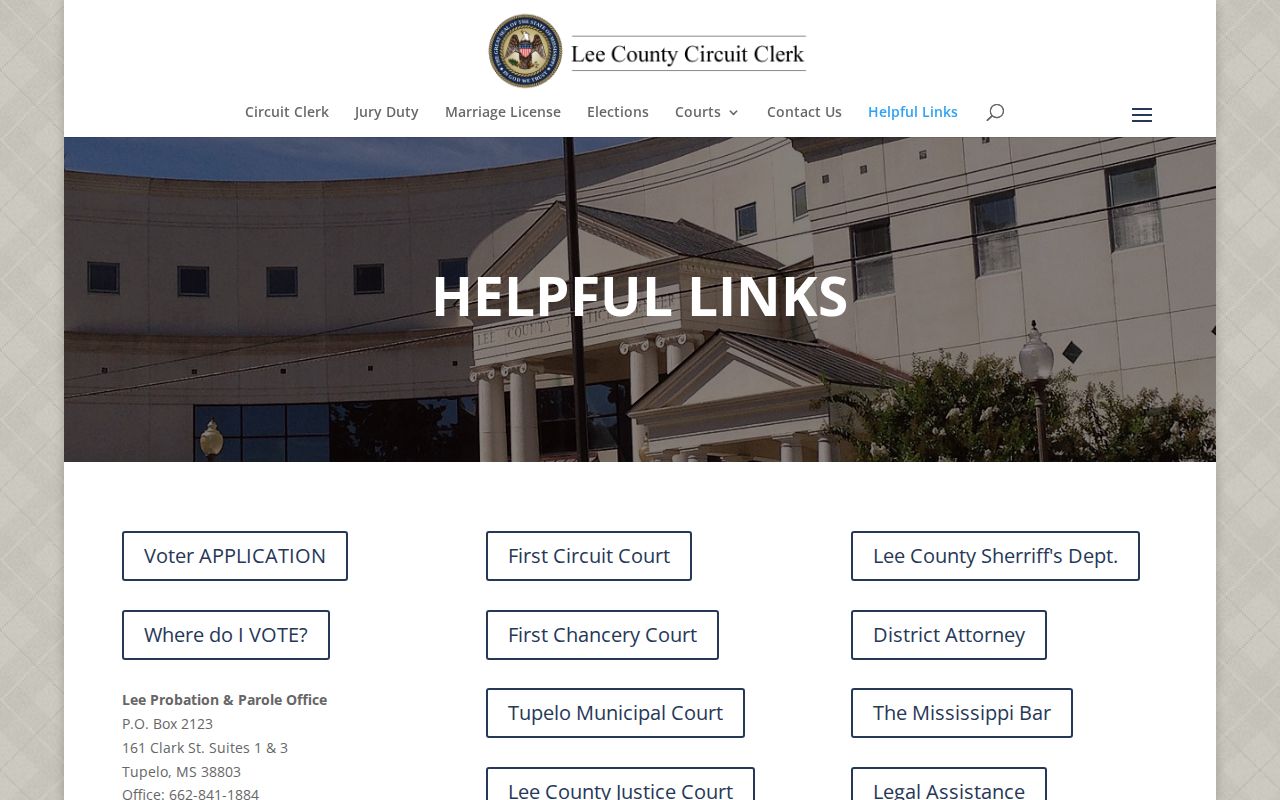
Official links steer you toward the correct court system. The clerk itself remains the source for an identified document or certified copy.
Types of Court Records
Record types in Lee County follow the court's subject matter and its clerk structure. Circuit and County Court files can hold felony, broad civil, and appeal materials. Chancery keeps domestic-relations, probate, guardianship, adoption, and related equity files, subject to access limits. Justice Court maintains its own civil, criminal, traffic, and small-claims records. Municipal court records are city-specific. A docket sheet, filing, or order is one ask. A judgment, minute entry, or abstract is another. Payment records, transcript questions, and appellate cross-references count too.
- Docket sheets and minute entries that record chronological court actions.
- Pleadings, motions, responses, process, and filed notices.
- Signed orders, judgments, dismissals, sentences, and dispositions.
- Chancery court files and minutes, separate from recorded land instruments.
- Justice or municipal citation records, which can include setting and payment fields.
A docket entry or calendar line may identify a document. It does not always include the document image, exhibit, transcript, or other material in the underlying file.
Lee County Court Mail Copies
Lee County Chancery publishes a specific mail-copy route. Describe the document well enough to identify it. The written request must also include a check or money order for the copies plus a stamped self-addressed envelope. Make payment out to the Lee County Chancery Clerk. This route covers a court-file copy request, not a broad name-only request or a land-record search. For Chancery calendar questions, ask the administrator or Clerk. They can help route the cause number to the file.
The Chancery Clerk's office also keeps land-record instruments and indexes, but those form a separate family from a Chancery lawsuit. A deed, lien, or UCC index result in CRMS will not answer a request for divorce, probate, guardianship, or other Chancery court-file documents.
Lee County's Chancery Clerk information describes the office's court-file, minute-book, process, fee, and appellate responsibilities.
The office description helps distinguish a Chancery case-file request from a recorded-instrument inquiry.
What a Court Record Contains
What sits inside a Lee County court record varies. It depends on the court and the layer you request. A docket sheet may show dated actions and filing references. The case file can hold the complaint, petition, answer, motions, responses, process, orders, and exhibits. A Chancery calendar adds setting fields. Cause number, parties, attorney listing, nature, estimated time, and status all appear there. A municipal trial-docket report is narrower. It tends to center on citation, offense, plea, fine, costs, bond, payment, and setting fields.
| Case or cause number | The court-assigned identifier. Keep its punctuation, year, county code, and suffix when making a request. |
|---|---|
| Docket or minute entry | A dated record of filings and court actions, which may point to a document without reproducing it. |
| Pleadings and process | Opening papers, answers, motions, service records, notices, and related submissions where public. |
| Orders and judgments | Signed rulings, settings, dismissals, sentences, or dispositions. The document text controls over a calendar label. |
| Restricted material | Redacted, sealed, youth, adoption, confidential-exhibit, or protected data categories that may not be released. |
Lee County Circuit Clerk Records
Camille Roberts Dulaney serves as Lee County Circuit Clerk. The office handles Circuit Court, County Court, and Youth Court records within this clerk structure. Its first-floor Justice Center office sits at 200 West Jefferson Street, Tupelo, Mississippi 38804. Mail goes to P.O. Box 762, Tupelo, MS 38802. Call 662-432-2300 for a Circuit, County, or Youth Court file. Ask whether the item is electronic, at the counter, fit for a mail request, or restricted.
The Circuit Clerk contact page routes your questions. It is the official source for contact routing and current office information.
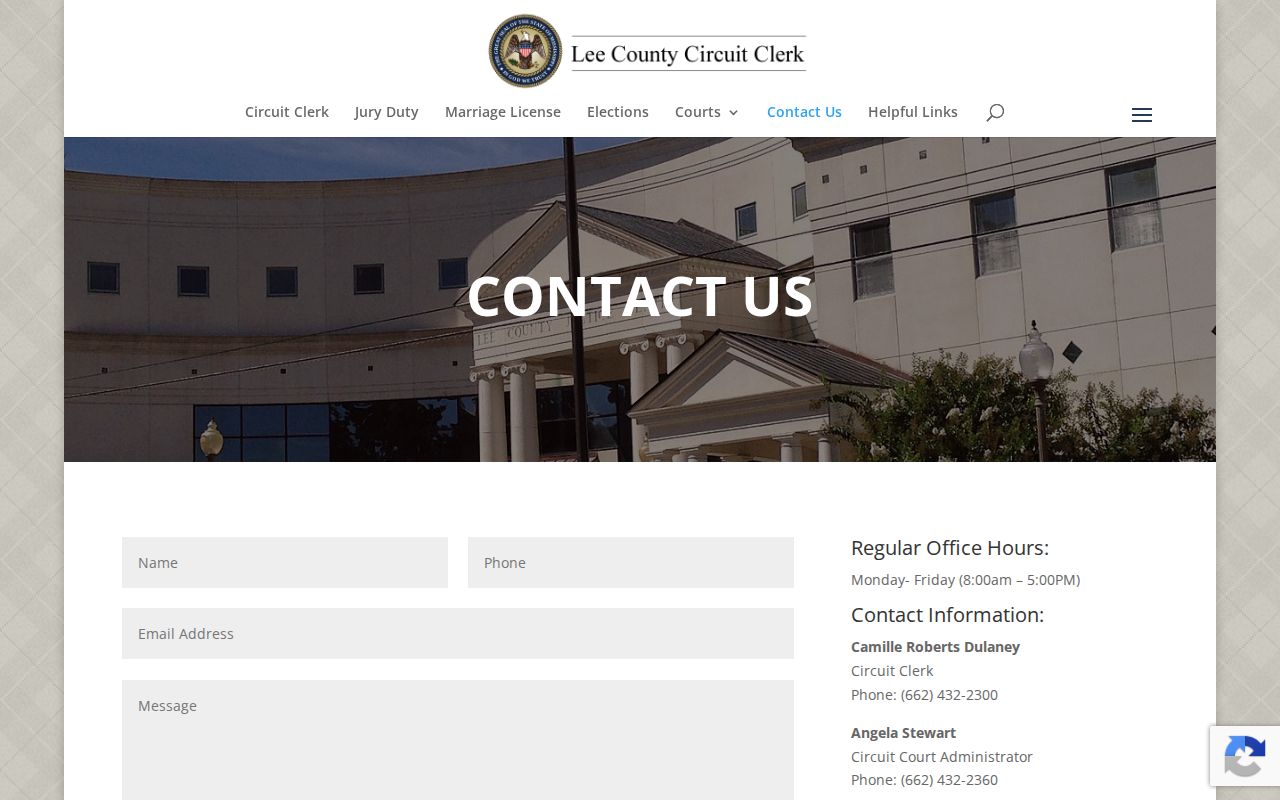
Call ahead with the essentials. Give the clerk the court, the cause number, the type of document, and the date range so the office can route your request on the first try.
Lee County Court Record Counter
The online index sometimes comes up short. A filing may never have been scanned. The Lee County clerk counter is the working answer in either case. Bring the court and division, the exact cause number, a rough filing year, and the document type. Ask upfront whether the item is public or falls into a sealed, youth, adoption, expunged, or redacted category. The clerk can tell you if the case went up on appeal. The office also knows when a file sits under a different cause-number format.
Free electronic access is available at the clerk's office during regular hours through MEC procedures. Copy fees still apply. Order only the pages you have identified. Ask for certification separately. The counter opens doors; it does not promise a look at restricted material.
Certified Copies and Fees
A plain copy just reproduces the page. A certified copy carries the clerk's authentication for official use. Request it that way. Do not assume. Chancery publishes its fees. For Circuit, County, municipal, and federal offices, ask each for its current copy or certification charge. The Justice Court abstract fee and the PAMEC subscription are separate transactions. They do not form one countywide copy schedule.
| Published item | Amount or access rule |
|---|---|
| Chancery public self-copy | $0.25 per page |
| Chancery staff copy | $0.50 per page |
| Chancery certification | Additional $1.00 |
| Justice Court abstract | $5 per case after the 30-day appeal period |
| PAMEC registration | $10 annual fee shown in the registration flow, separate from copies |
Lee County Circuit Clerk
200 West Jefferson Street, first floor
Tupelo, Mississippi 38804
662-432-2300
Lee County Court Record Fees
Lee County Chancery wants payment and a stamped return envelope with any mail-copy request. The office takes cash, check, money order, and credit or debit. Cards carry a 2.9% fee. The online CRMS land-record service charges differently: a 3.5% service fee and a $2 minimum. That online fee belongs to the land-record system alone. It is not a court-file copy charge. Justice Court publishes filing fees. It also lists an abstract fee. Neither one sets the price of every court record.
Get a current quote before you send anything in. This matters most for certified documents, multi-page files, transcripts, federal paper copies, and municipal records. PAMEC, PACER, city payment vendors, and clerk copying are all distinct transactions. Rolling them into one fee claim hides which office or system produced the record.
Lee County Court and Land Records
The Chancery Clerk keeps court records and, separately, a public land-record index. CRMS covers recorded instruments: deeds, deeds of trust, liens, UCC items, powers of attorney, and military discharges. It is not a court docket. For a Chancery lawsuit, use Chancery Court or the Clerk. Request by cause number, party name, or court date. For a recorded instrument, start with the grantor or grantee. Bring the instrument type, the book and page or recording number, a date range, and the legal description.
Keeping these paths straight matters. An online land-record copy is not a divorce, probate, guardianship, adoption, or other Chancery case file. The split also sends certification questions to the office that truly holds the record you want.
Public Access and Sealed Records
The Mississippi Public Records Act backs access. Offices may set reasonable written procedures on cost, time, place, and method. If a record holds exempt material, the nonexempt part should still be released after redaction. A written denial must state the reason. Court-specific confidentiality rules stay in force. Public access never means every document lands online, unredacted, and open to all.
Key rules. Mississippi Public Records Act material for §25-61-5 describes public access, reasonable procedures, redaction, and written-denial concepts; confirm the current enacted code before relying on deadlines.
First Circuit Rules of Court directs users to current Mississippi procedural and local rules for file access and court procedure.
Lee County Youth Court identifies a confidentiality-sensitive court division, so a general adult-record request does not authorize access to a child’s file.
Lee County Chancery treats adoption records as sealed. Sealed, expunged, youth, adoption, confidential-exhibit, and protected-data records all go through the responsible clerk and the applicable court procedure.
Lee County Court Record Redaction
MEC procedures shield certain details: Social Security and tax numbers, dates of birth, minor names, financial-account data, and home addresses. Similar sensitive fields get the same treatment. A restricted result can also trace to a sealed document, an expunged case, an adoption file, a youth matter, or an access condition. Ask for the public, nonexempt portion. Accept the redaction. Never try to rebuild missing text or guess a result from an empty screen.
The official legislative text source used for the public-access discussion gives the statutory context for a narrow, segregable request. The official page it links to shows the enacted language itself.
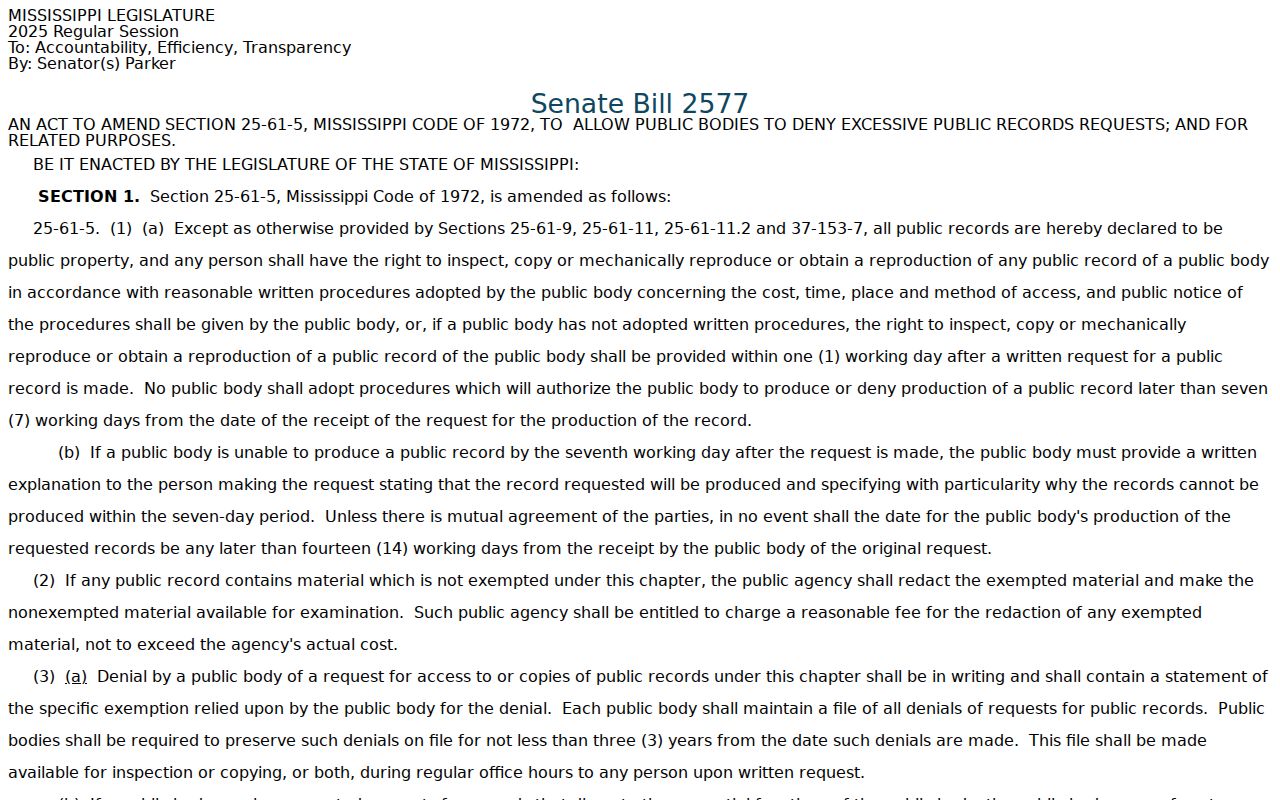
A good request is a narrow one. Name the case, court, document, date range, and the portion you want, without turning an access request into an overbroad personal-record inquiry.
Lee County Court Index Problems
A missing index entry has ordinary explanations. The wrong court, the wrong county, a different cause-number format, an appeal route, or a paper-era file may be at work. A restriction may be at work too. Lee Circuit and County MEC entries carry a February 7, 2022 go-live date in CourtInfo material, so older records may need the clerk or a courthouse terminal. A calendar can show a setting yet still omit filings. A public terminal offers free electronic access during regular hours. Remote PAMEC access may simply be the wrong route.
A calendar label is not a result. Orders are what count. Ask whether the clerk can pull the docket entry, signed order, judgment, or minute record that answers your actual question. Once the case turns up, a Lee County case search helps you keep the right court. It also holds the identifier for a follow-up request.
First Circuit's rules page is the official home of current procedural materials that may govern a court-file question, and that page shows the standing rules themselves.
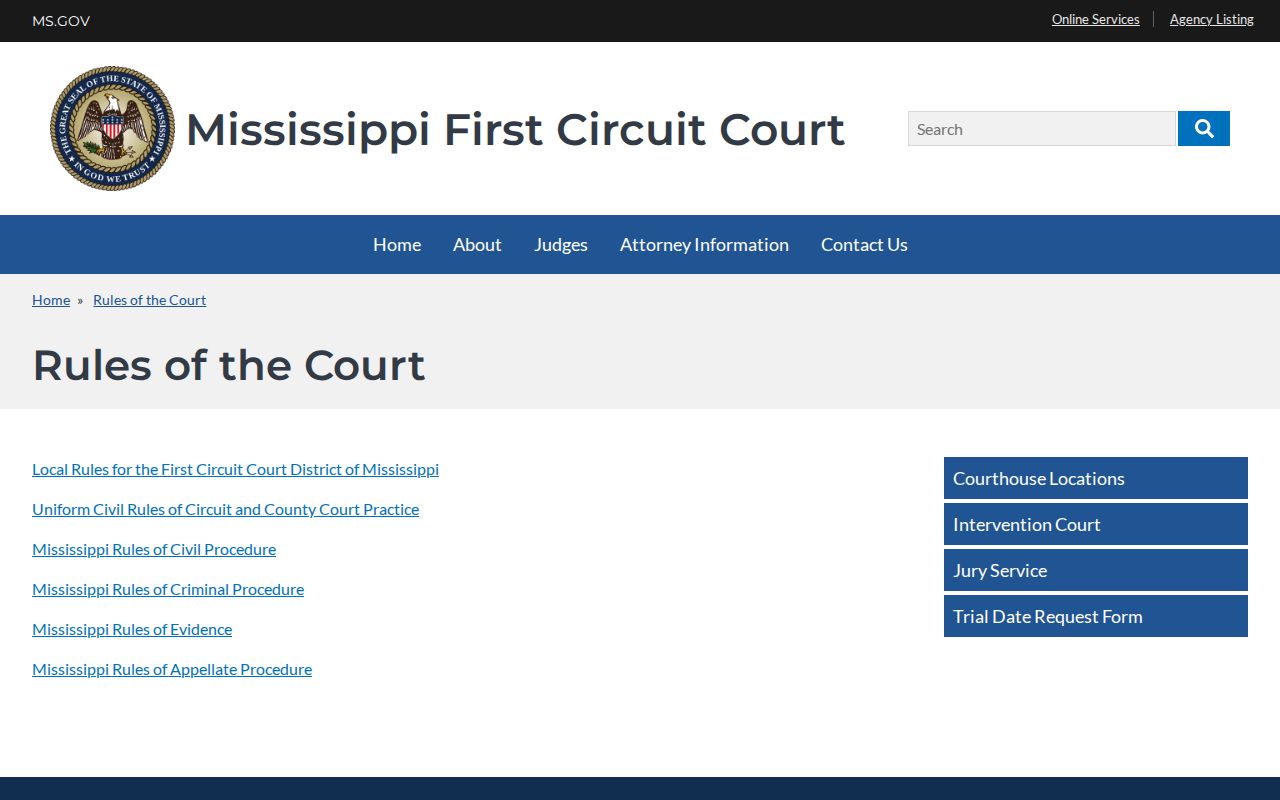
Pair the current court rule with the clerk's instructions. That combination is what settles a request involving procedure, access conditions, or a disputed copy route.